My Childhood with Insomnia
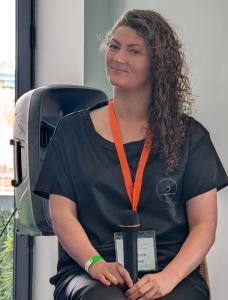 I'd always struggled with sleep since I was a child. As long as I can remember… I remember lying in bed while it was still light outside. There wasn't even a clock in my room, but I remember lying there for hours and hours, unable to sleep, thinking about all sorts of things. Most of them were imaginary. I'd make up fun scenarios in my head, like I could fly, or that I had a secret dressing room that would dress me and pick out my clothes for me, or that animals could talk.
It started in childhood, but it stayed with me all the way into adulthood. I'd have spells where my sleep was worse than others, but it had always taken me a long time to get to sleep. I remember going to stay at friend's houses. Everyone else would be asleep, and I'd be lying there awake for hours. People would often say to me, "I don't know how you function. You've literally had about four hours' sleep." Looking back now, I suppose I'd just accepted that was who I was.
I first ended up on sleeping tablets when I was 18 although it was only for a short time. When I reached 21, my insomnia became really severe. I'd become really, really depressed and very anxious although I didn't realise it at the time. Hindsight is a wonderful thing.
I remember going to the doctors and the doctor saying to me, "You can't sleep because you're depressed." I remember saying, "No. I'm depressed because I can't sleep."
I was started on antidepressants that had a sedative effect to help me sleep. But with that came unwanted side effects, like putting on weight. Then came chopping and changing medication all the time.
When Sleeping Tablets Stopped Working
I was prescribed Zopiclone, but I soon built up a tolerance. Before I knew it, I was on a higher dose. Then I was switched to a different sleeping medication. I'd start on a low dose, then that would be increased until eventually that stopped working too. Then it would be another medication, another higher dose. Before I knew it, I was taking sedatives, sleeping tablets and antihistamines, all in sheer desperation to get to sleep.
I was working, and every year became more and more of a struggle. I'd go through the odd spell where I'd sleep ok, but sure enough, the insomnia would come back. I was working as a Health and Safety Manager at the time, which was a fairly high-pressure role. I had a lot of stress, which only added to the sleepless nights. Before I knew it, I was back in that cycle of insomnia again.
Things just spiralled and spiralled. I'd be drinking copious amounts of alcohol to get to sleep, alongside sleeping tablets, only to wake up a few hours later. I don't think people would believe me if I told them how many sleeping tablets I would take, just in the sheer desperation to sleep.
One soon became two, two became three and three became seven. Before I knew it, I was completely spiralling out of control. There are years of my life I barely remember because I was constantly sedated, but I still wasn't sleeping.
How Insomnia Took Over My Life
Eventually, it all caught up with my body. Between the alcohol, antidepressants and sleeping tablets, I’d hit rock bottom and I was signed off work. About a year later, a long term relationship broke down. It wasn't the easiest of break ups, and with it came more stress, more uncertainty and, once again, the insomnia returned.
By then I'd moved house and started another Health and Safety job with a different company. Again, my sleep started spiralling. I even decided to work nights because I wasn't sleeping at night anyway. The problem was, I wasn't sleeping during the day either, so I just became even more exhausted.
Eventually I needed more time off work because I simply couldn't function. The same cycle started all over again. Alcohol. Sleeping tablets. Building up a tolerance. Medication being increased. Medication being changed. Then increased again.
Around that time, I remember I was seeing someone new. I'd lie there for hours, unable to sleep. Eventually I'd get so frustrated that I'd quietly get up in the middle of the night, sneak out of the house so I didn't wake him, and drive home. That never used to go down very well.
But insomnia is such an isolating thing. Everyone around me would say, "Oh, everyone struggles with sleep." Yet I didn't know anyone who was actually struggling with sleep in the way I was. I felt like I was walking this lonely path completely on my own. When I look back, I probably lived with persistent insomnia for around eleven years.
One morning my alarm went off for work. I woke up, turned the alarm off and just thought, "I can't do this anymore”. I felt completely exhausted. I had no energy. I'd lost all motivation. I'd completely lost the will to carry on living the life I was living.
I turned the alarm off... and I never went back to work. I ended up having a couple of years off. At the time, I thought having time away from work was exactly what I needed. Looking back, it probably didn't do me any favours.
As time went on, insomnia continued to rule my life. I'd sit in the house on beautiful sunny days with the curtains shut, hiding away from the outside world. I can still remember sitting there, looking at the digital clock on my oven and saying to myself, "Sharlene... what sort of life is this? You really need to sort your life out." That moment became the turning point in my life.
I'd seen psychologists, psychiatrists and I'd tried and failed multiple CBT-I programmes. Being ADHD, I struggled with the rigidity of them and failed more than once.
Why I Became an Insomnia Counsellor
When I decided I really wanted to sort my life out, I remember going to see a counsellor. Honestly, she made me feel worse than I did when I went in. I was feeling so lost with life. I wanted to get back on my feet, get back into work, sort my sleeping habits out, have healthier routines and healthier people in my life. I walked in there not knowing what to do with my life, hoping I would get some clarity, I walked out feel unheard, misunderstood and full of shame.
That was when the penny dropped for me… I decided I was going to retrain as a counsellor so that I could help people in my position not feel the way I did. I wanted to be the counsellor I wish I'd had when I needed one the most.
Throughout my training, I listened to several podcasts by private practice owners who I really aspired to be like. They all talked about niching, and I remember thinking to myself, I don't know what to niche in because I'm not an expert in anything.
I remember speaking to my supervisor about it. She asked me, "Is there something you know a lot about? Is there something you really understand? Is there something you've had real life experience with?" And then... boom! The penny dropped again. Insomnia.
During my long stint of sleepless nights, I did God knows how many hours of my own research into insomnia, the brain, the effects of sleeping medication, and exploring different alternatives to help with sleep, including CBT-I.
Discovering CBT-I
Eventually, I decided to do another CBT-I programme. The support still wasn't there, but this time I was determined that, even though the programme itself was quite rigid, I was going to make it flexible enough to fit me. I adapted it to work around my ADHD. I made it manageable. And it worked…CBT-I worked for me. After years of believing I'd never sleep properly again, things finally started to change.
A few years later, after qualifying as a counsellor, I found myself thinking, Why don't I become a CBT-I therapist? How would I even go about doing that? Is an insomnia therapist even thing? I started researching it and came across The Sleep Charity. The Sleep Charity does some fantastic work, and I only wish I'd known about them during my own years of struggling with sleep.
I discovered they offered CBT-I training with Professor Jason Ellis. And the great thing was it was only in Doncaster which is only half hour away from Gainsborough. I have to say, it was the best course I've ever done. Professor Jason Ellis was absolutely fantastic. His knowledge was astounding, and I honestly hope to have even a quarter of the knowledge he has one day.
I'd already set up my private practice and was working as a counsellor before completing my CBT-I training, but afterwards everything became much clearer. This was where I wanted to focus. Don't get me wrong, I still work with clients for lots of different reasons, including trauma, ADHD, anxiety and depression and I love how rewarding that is. But insomnia has become my passion.
Not just because I've studied it. Because I've lived it.
I know the desperation. I know the loneliness. I know what it's like to dread bedtime. I know what it's like to spend years believing nothing is ever going to change. And I also know what it's like to come out the other side. That experience shapes every piece of work I do with my clients.
Helping Other People Sleep Again
I now delivered my own CBT-I programmes to many people, but no two programmes ever look exactly the same. I tailor every session to the individual sitting in front of me - their goals, their personality, their lifestyle, what works well for them and what doesn't. I really listen to what they're telling me because I've learned there is no such thing as a one size fits all approach, especially when someone has been struggling for a long time.
So far, I've been fortunate enough to see some wonderful outcomes with my clients. Seeing someone begin to believe they can sleep again is something I'll never get tired of.
Can CBT-I Help Chronic Insomnia?
Since then, I've also started going into workplaces to deliver talks on insomnia. A lot of people actually ask me what is CBT-I? and what does CBT-I stand for? Well, it is the first line treatment for chronic insomnia yet it seems to be rarely offered to people and CBT-I stands for cognitive behavioural therapy for insomnia and it is specifically for the treatment of chronic insomnia.
The more I talk to people, the more I realise just how common insomnia is. It’s estimated that insomnia affects around a third of adults in the UK. That's just the people we know about who actually go to their GP. For something that affects so many people, there still isn't enough support available, and I'd love to help change that.
There's often a long waiting list for CBT-I, and many NHS services only offer it online. Whilst online insomnia therapy programmes absolutely have their place, I genuinely believe that one to one support can make such a difference. Having someone sit alongside you, someone who listens, someone who understands, and someone who can adapt things when life gets in the way is invaluable. For me, that's where the real value is, especially if the person delivering it has lived through insomnia themselves.
I know what it feels like to lie awake watching the clock. I know what it's like to become frightened of bedtime. I know what it's like to try absolutely everything, only to feel like you've failed yet again.
That's why every conversation I have with my clients is so important to me. I genuinely love hearing their stories. Every person is different. Every person's insomnia is different, and every person teaches me something new. I certainly don't know everything, and I never pretend to. If there's something I don't know, I'll go away and research it. Whether it stays in my head for very long is another matter!
People often ask me why I'm so passionate about insomnia. The answer is simple… Because I know what it can take from you.
It isn't just about being tired. It's about the desperation, the despair, the loneliness, the isolated nights, the isolated years and the effect it has on your work, your relationships, your friendships and your mental health.
Insomnia is something that slowly engulfs you. You don't realise it's captured you until you're in it.
For years, I thought I was the only one. People would tell me, "Everyone struggles with sleep." But that's not what I was experiencing. This wasn't the odd bad night. This was years of my life being ruled by whether I would sleep or not. It affected every decision I made. It affected who I was and the people around me.
The good news is that it doesn't have to stay that way. I'm not saying CBT-I works for everyone because I've never believed in a one-size-fits-all approach. But I do believe it can help so many people. When someone is ready to make changes, and they're supported in a way that works for them as an individual, the results can be life changing.
I've seen that in my clients. And I've lived it myself. If sharing my story helps just one person realise that they're not beyond help, and they really don’t have to face it alone, then it's been worth telling.
I truly believe that, with the right support, CBT-I can change your life, just as it changed mine.
If you would like to know more about CBT-I you can check out my insomnia page here. Or if you would like to know anything else, please reach out! You can contact me via my contact page here.